

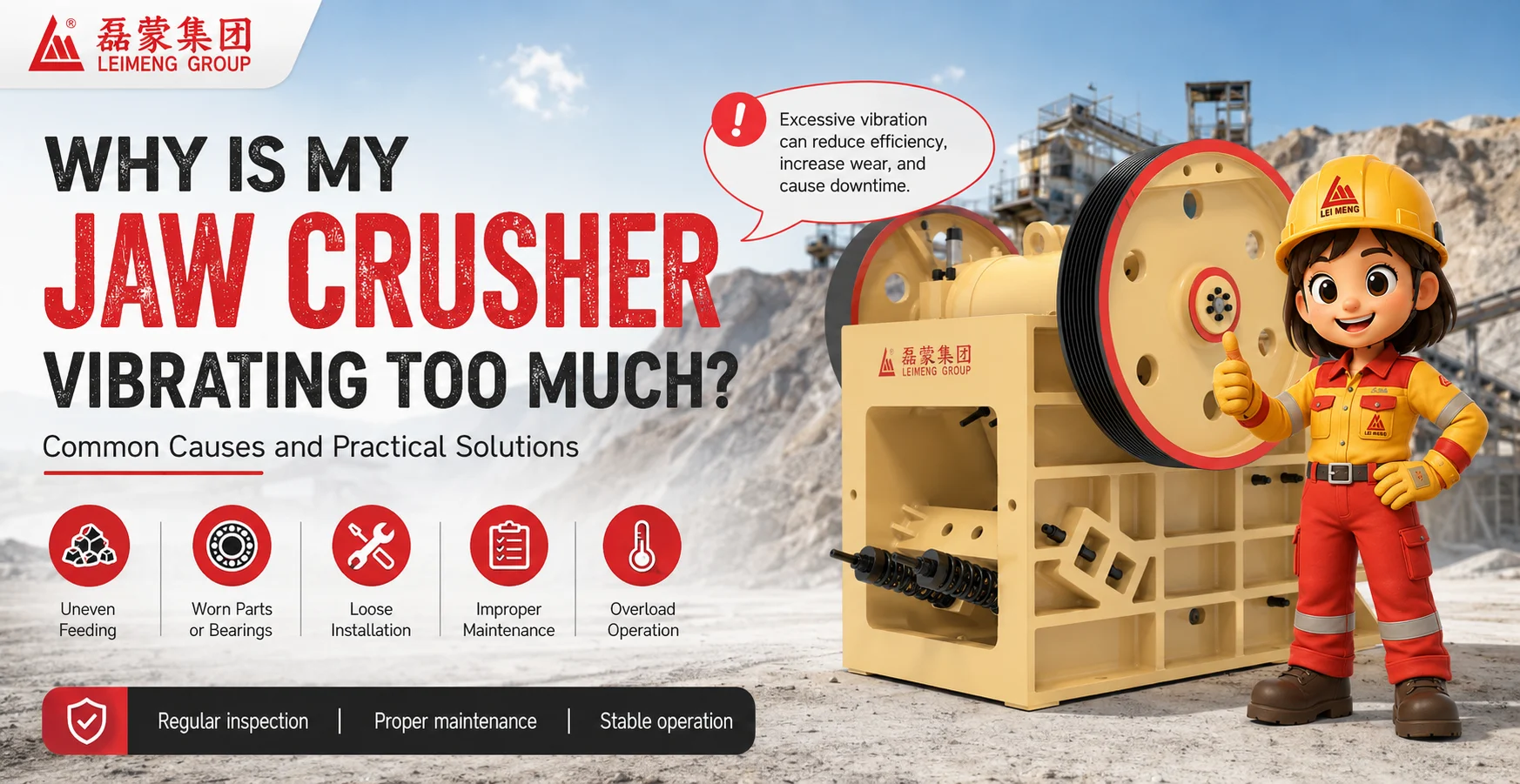
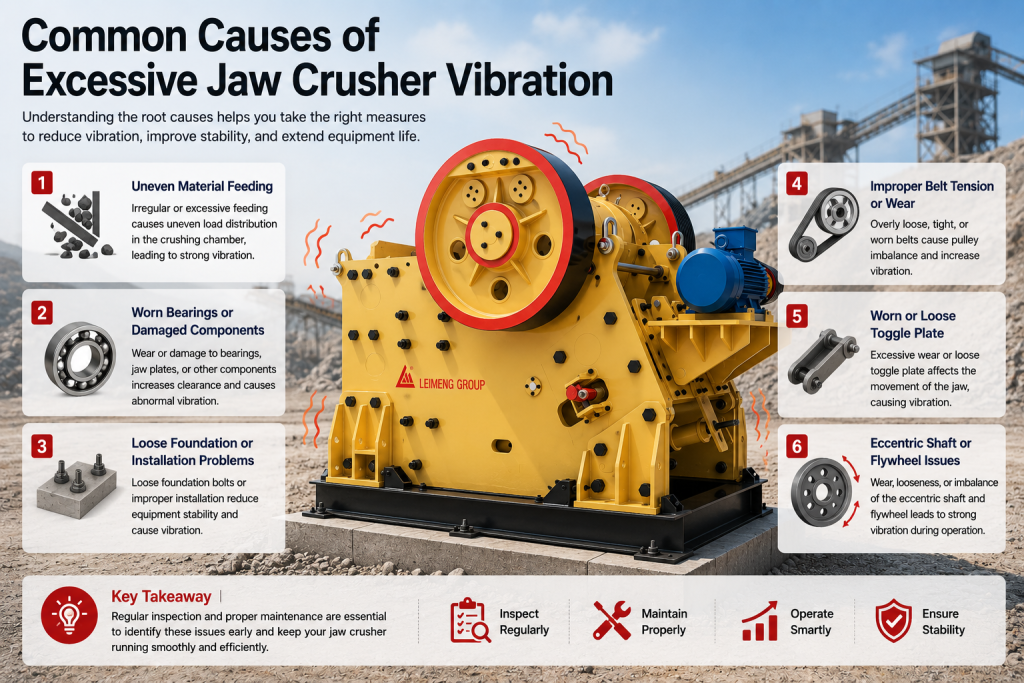
Excessive jaw crusher vibration can reduce equipment stability and increase maintenance costs.
In mining and aggregate operations, stable equipment performance is essential for maintaining production efficiency. However, many operators notice abnormal vibration during jaw crusher operation, especially under heavy-load working conditions.
Excessive jaw crusher vibration not only affects crushing efficiency but may also accelerate bearing wear, damage structural components, and increase unexpected downtime.
In many cases, vibration problems are related to improper installation, uneven feeding, worn parts, or inadequate maintenance. Therefore, identifying the root cause early can help reduce expensive equipment repair costs and minimize production interruptions.
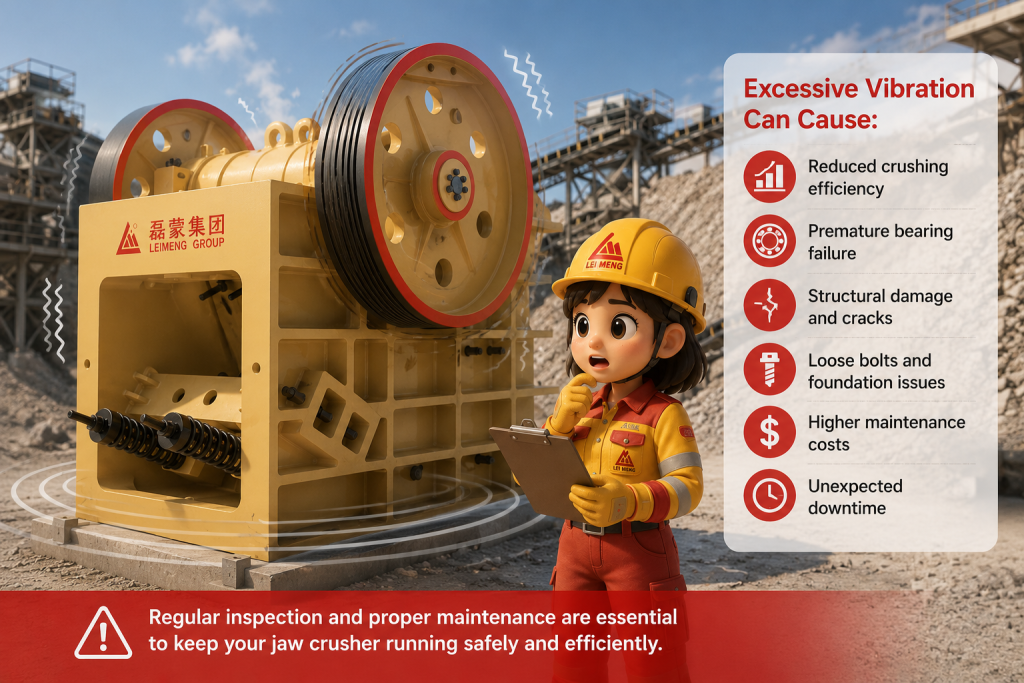
Continuous vibration may damage bearings, foundations, and steel structures.
A jaw crusher naturally produces vibration during operation. However, excessive vibration often indicates that certain mechanical components are no longer operating correctly.
If vibration levels continue increasing, several problems may occur:
Moreover, severe vibration may eventually force the crushing plant to stop production entirely.
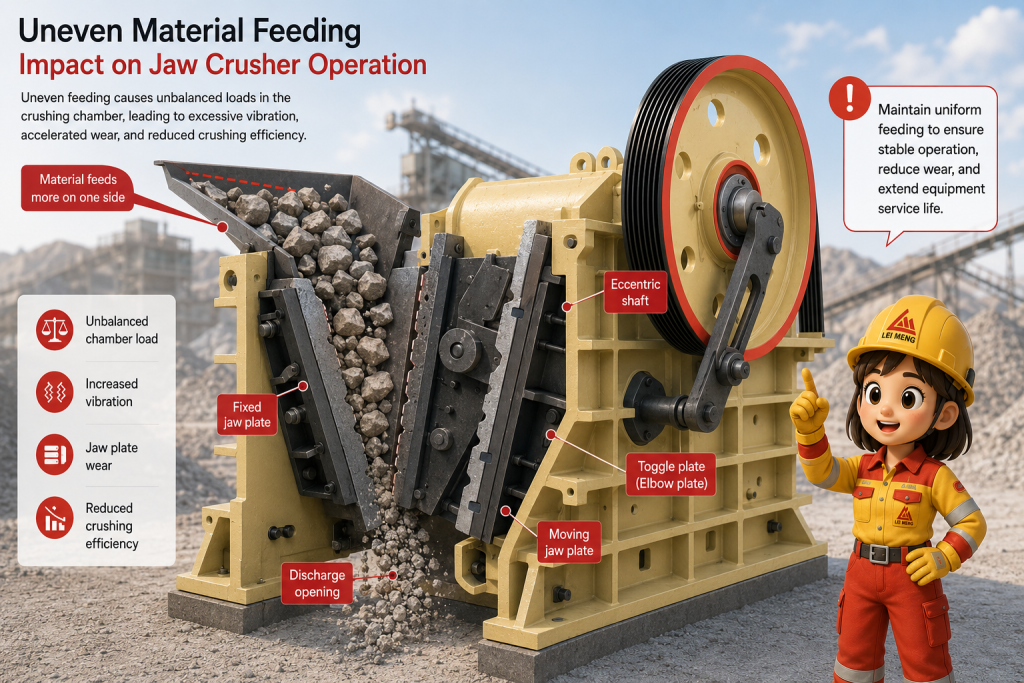
Uneven feeding can create unstable load distribution and increase crusher vibration.
Uneven feeding is one of the most common causes of jaw crusher vibration. When oversized material enters one side of the crushing chamber, the load distribution becomes unstable.
As a result, the crusher may experience:
To reduce vibration, operators should maintain continuous and evenly distributed feeding conditions.
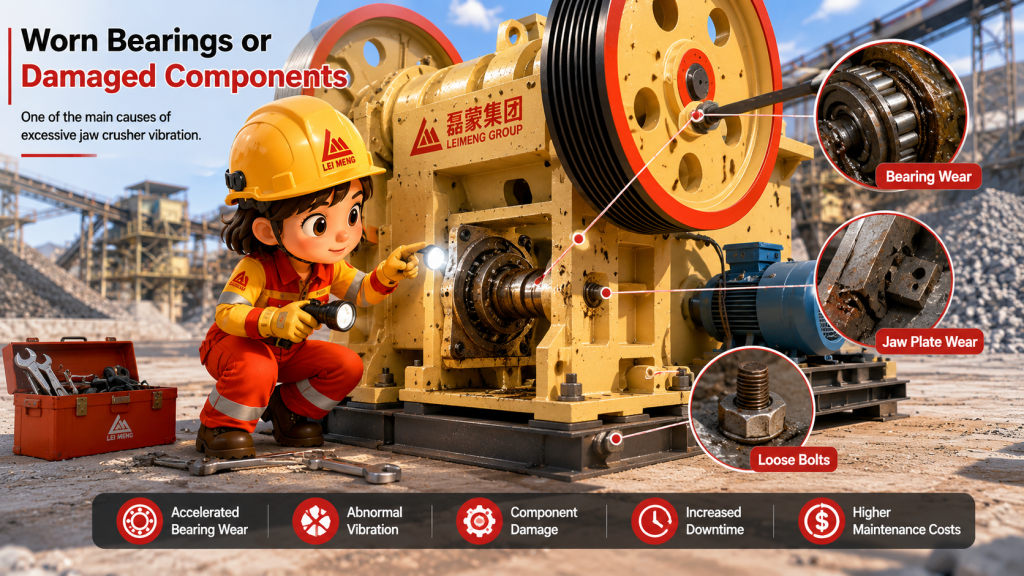
Damaged bearings and loose rotating parts are common sources of abnormal vibration.
Bearing wear can significantly increase jaw crusher vibration. In dusty mining environments, contaminated grease and insufficient lubrication may accelerate bearing failure.
In addition, damaged flywheels, loose pulleys, or worn shafts can also create abnormal vibration during operation.
Regular inspection and lubrication management are essential for reducing mechanical stress and extending equipment service life.
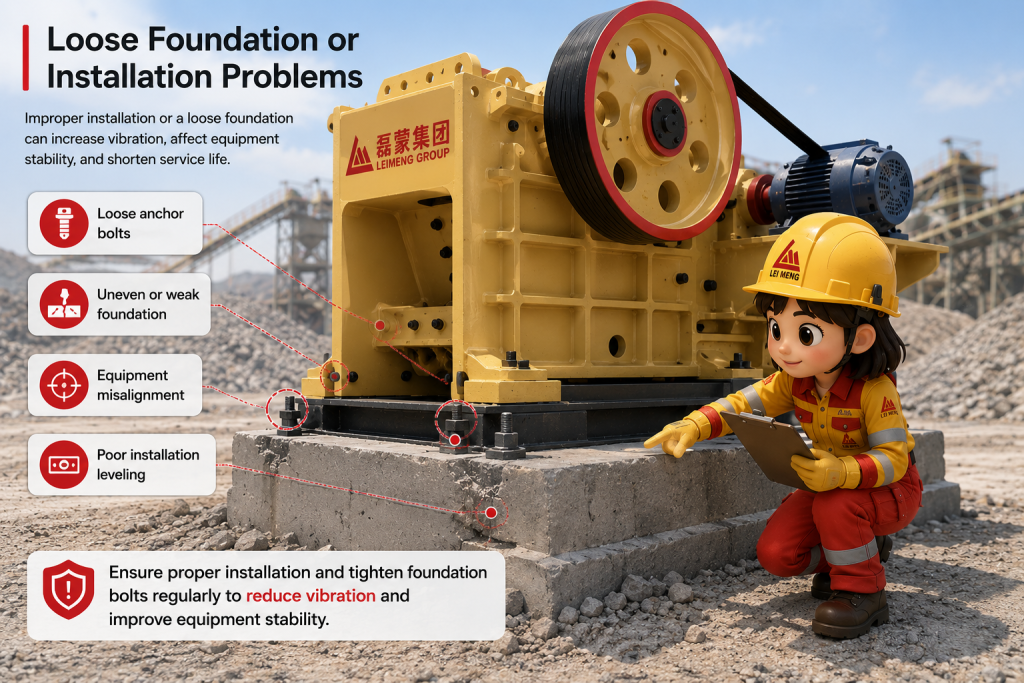
Poor installation and unstable foundations may significantly increase vibration levels.
Improper installation is another major reason for excessive crusher vibration. If foundation bolts become loose or the supporting structure lacks stability, vibration levels may increase rapidly.
In some mining projects, long-term heavy-load operation can gradually weaken the foundation structure.
Therefore, operators should regularly inspect:
Proper installation can greatly improve crusher stability.
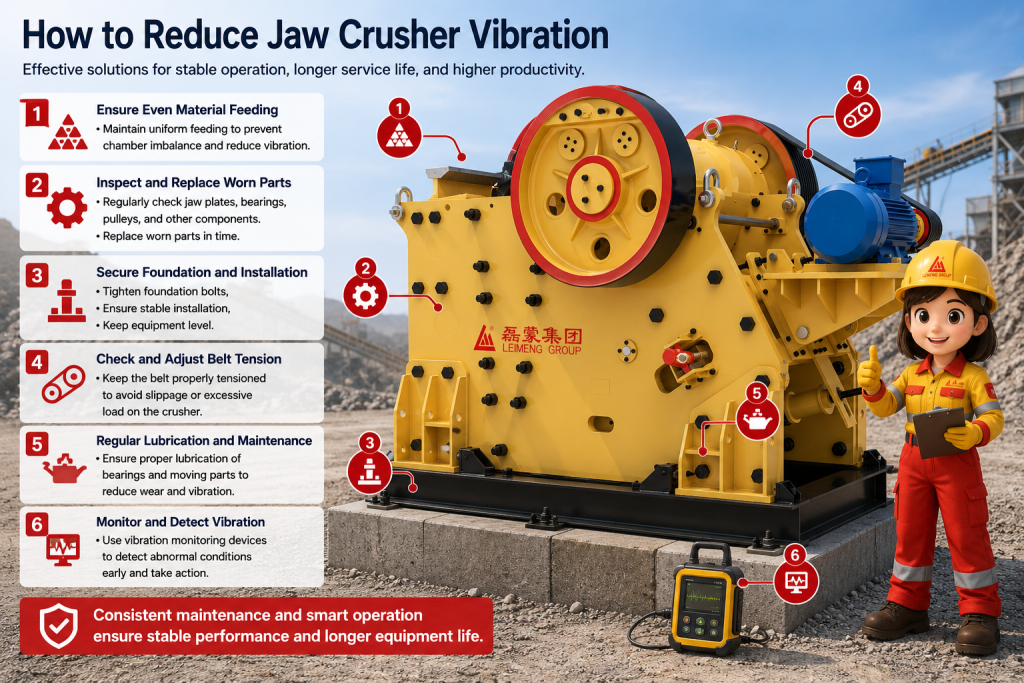
Regular inspection and preventive maintenance help reduce crusher vibration problems.
Reducing jaw crusher vibration requires both proper maintenance and stable operating conditions.
Several effective solutions include:
In modern mining plants, preventive maintenance is often more cost-effective than emergency repairs.
Jaw crusher vibration problems are often early warning signs of mechanical instability. By identifying the root causes early and implementing regular maintenance procedures, mine operators and aggregate producers can improve equipment reliability and reduce long-term operating costs.
For crushing plants operating under demanding conditions, preventive maintenance is essential for maintaining stable production performance.
Leimeng Group continues to provide reliable crushing and screening solutions for mining clients worldwide.
Email format error
Email cannot be empty
Email already exists
6-20 characters(letters plus numbers only)
The password is inconsistent
Email format error
Email cannot be empty
Email does not exist
6-20 characters(letters plus numbers only)
The password is inconsistent