
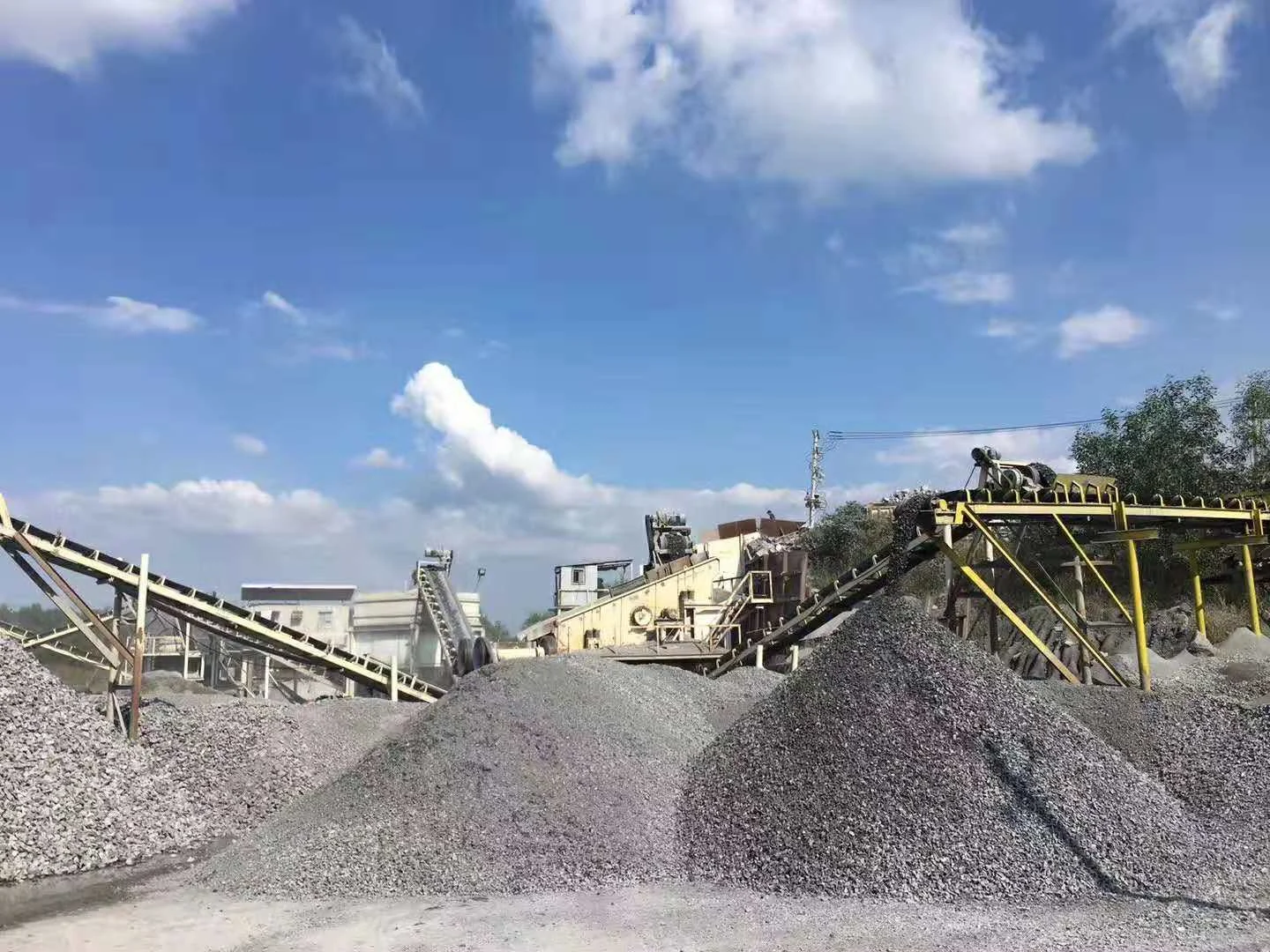
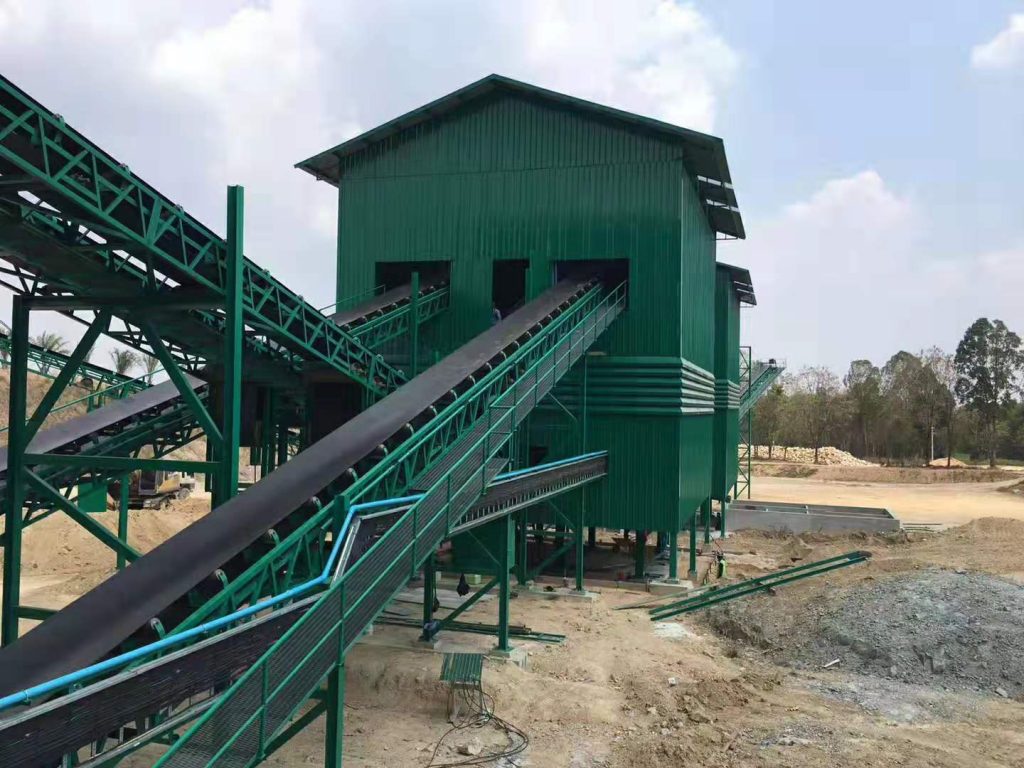
Leimeng 600 TPH eco stone crushing plant in Thailand, built for infrastructure aggregate production.
For overseas quarry and mining clients, reliable crushing plant service is not judged only by equipment delivery. The real test begins when the plant enters daily production: whether the output remains stable, whether finished aggregate quality is consistent, whether wear parts last long enough, and whether technical support responds when problems appear.
A reliable crushing and screening plant must deliver stable output, consistent aggregate quality, reasonable wear parts life and timely technical support. If any part of the system fails, production can stop, operating costs can rise, and the client’s confidence can be affected.
That is why Leimeng sees crushing plant service as part of the project itself. From plant design and equipment supply to installation, commissioning, operator guidance and after-sales response, service is what turns machines into a working production system.
Across Thailand, Vietnam, Cambodia, Tajikistan and other overseas markets, client feedback has confirmed one point: long-term trust is built on stable equipment and responsible service, not on sales promises alone.
In 2018, Leimeng built and exported a 600 TPH eco stone crushing plant to Thailand. The project was designed to produce crushed stone for transportation, civil construction and infrastructure applications.
The plant was not a single-machine project. It included a full crushing, screening, sand making, washing and conveying system. Main equipment included HPY Multi-Cylinder Hydraulic Cone Crushers, LSX Spiral Sand Washers, YKJ Vibrating Screens, PCX high-efficiency Sand Making Machines, belt conveyors.
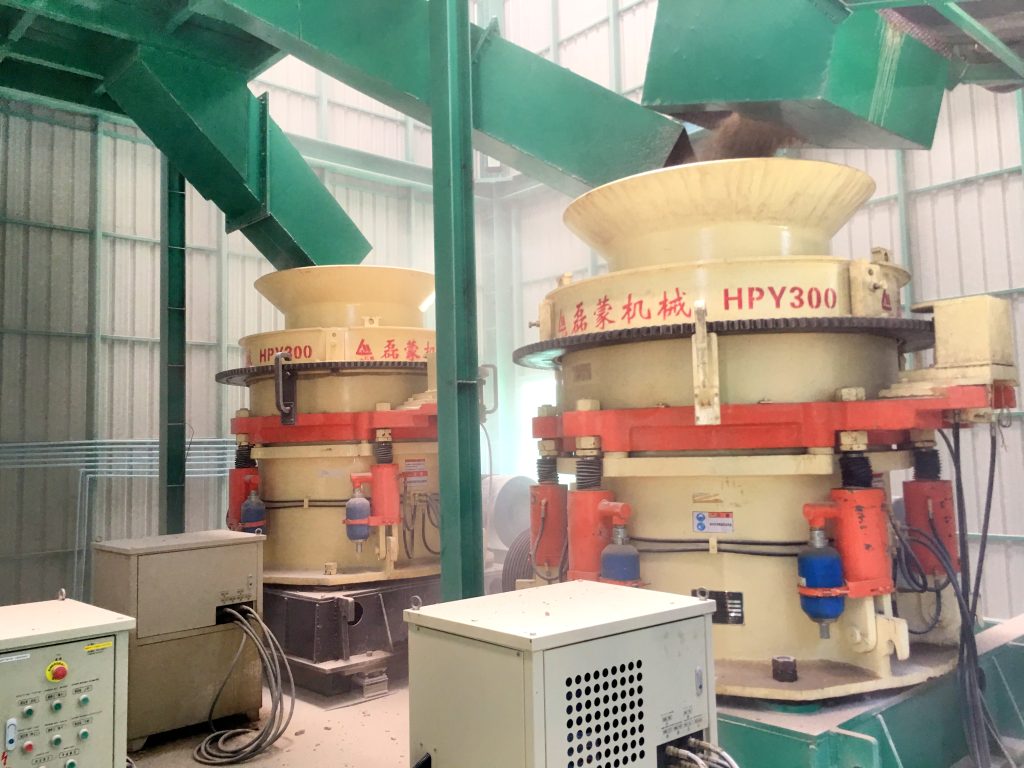
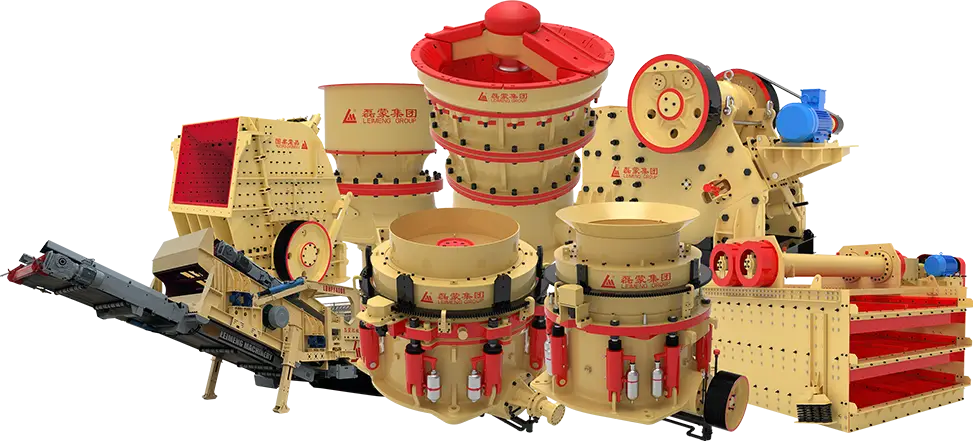
Leimeng HPY multi-cylinder hydraulic cone crusher used for secondary and fine crushing in aggregate plants.
| Project Item | Details |
| Project location | Thailand |
| Delivery year | 2018 |
| Plant capacity | 600 tons per hour |
| Main application | Crushed stone for infrastructure construction |
| Main equipment | HPY cone crushers, YKJ screens, PCX sand making machine, LSX spiral washer, conveyors |
| Client focus | Stable output, longer wear parts life, fast after-sales response |
In this project, crushing plant service covered more than equipment supply. It included plant configuration, equipment matching, installation guidance, commissioning support, wear parts service and after-sales response.
The value of this project was not only the 600 TPH capacity. More importantly, the equipment had to work as a balanced system. The plant integrated HPY Multi-Cylinder Hydraulic Cone Crushers with YKJ Vibrating Screens, PCX high-efficiency Sand Making Machines and LSX Spiral Sand Washers. Crusher closed-side settings (CSS), screen mesh configurations and conveyor throughput capacities were engineered together to maintain stable aggregate gradation and minimize recirculating loads.
For a 600 TPH aggregate production line, even small mismatches between cone crusher discharge settings and vibrating screen apertures can reduce screening efficiency and increase unnecessary crusher workload. By coordinating crushing, screening, sand making and washing stages as a complete process, the plant achieved stable production and consistent finished product quality.
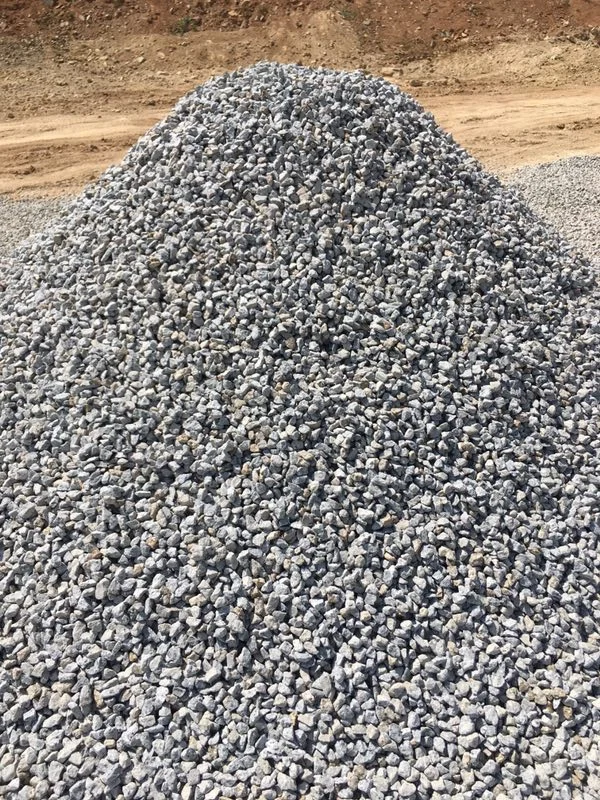
Finished aggregates produced by the Thailand crushing plant, featuring uniform particle size and excellent grading for commercial use.
Before purchasing the equipment, the Thailand client compared several suppliers and also consulted industry experts about equipment configuration. This is common for large overseas crushing plant projects. For clients, price is important, but it is not the only factor.
After the plant was put into operation, the client highlighted two key points.
The client reported that Leimeng’s wear parts performed well and had a longer service cycle. For a 600 TPH crushing plant, this directly affects production continuity.
Wear parts are not just spare components. Jaw plates, cone liners, mantles, concaves, blow bars and screen mesh all influence plant stability. When wear parts last longer, the site can reduce replacement frequency, lower maintenance pressure and avoid unnecessary downtime.
For quarry and mining operators, wear parts are closely linked to overall operating costs. Frequent replacement not only increases spare parts expenses but can also interrupt production schedules. This is why many clients pay close attention to wear parts quality when evaluating a crushing plant supplier.
The client also noted that Leimeng’s after-sales technicians could solve equipment issues in time. For quarry and mining operators, unexpected mechanical failure is one of the biggest concerns.
Leimeng’s 24-hour on-site service commitment gave plant operators greater confidence. In overseas projects, this kind of service promise is not a slogan. It is a risk-control measure.
Besides the Thailand project, Leimeng also received thank-you letters from clients in Cambodia, Vietnam and Tajikistan. Although the projects were different, the message behind them was consistent: clients valued stable production, professional engineers and long-term support.
The Cambodia client thanked Leimeng for a full crushing and screening project that entered operation in 2024. The plant included a PE912 Jaw Crusher (PE900×1200), DS480 Single-Cylinder Hydraulic Cone Crusher, HP400 Multi-Cylinder Hydraulic Cone Crusher and vibrating screens. According to the thank-you letter, the production line has operated steadily since commissioning, delivering the expected output and product quality while supporting efficient project progress.
The client also praised Leimeng’s after-sales team for their professionalism and responsiveness during installation, commissioning and follow-up support. Close cooperation between Leimeng engineers and the site team helped shorten the commissioning period and enabled the plant to reach stable production more quickly.
For overseas projects, this type of technical support throughout equipment delivery, installation, commissioning and production startup helps reduce risks during the trial operation stage. It can also minimize downtime caused by unfamiliar operation or process adjustments, ultimately improving overall project efficiency and return on investment.
The Cambodia project highlights a key lesson for overseas crushing plant operations: long-term success depends not only on reliable equipment, but also on effective technical support and continuous service. Even a well-designed crushing and screening plant requires proper commissioning, operator training and ongoing maintenance guidance to achieve its expected performance. By working closely with clients throughout the project lifecycle, suppliers can help ensure stable production, consistent product quality and smoother day-to-day operations. This combination of equipment reliability and responsive service is often what determines whether a crushing plant can maintain efficient operation over the long term.
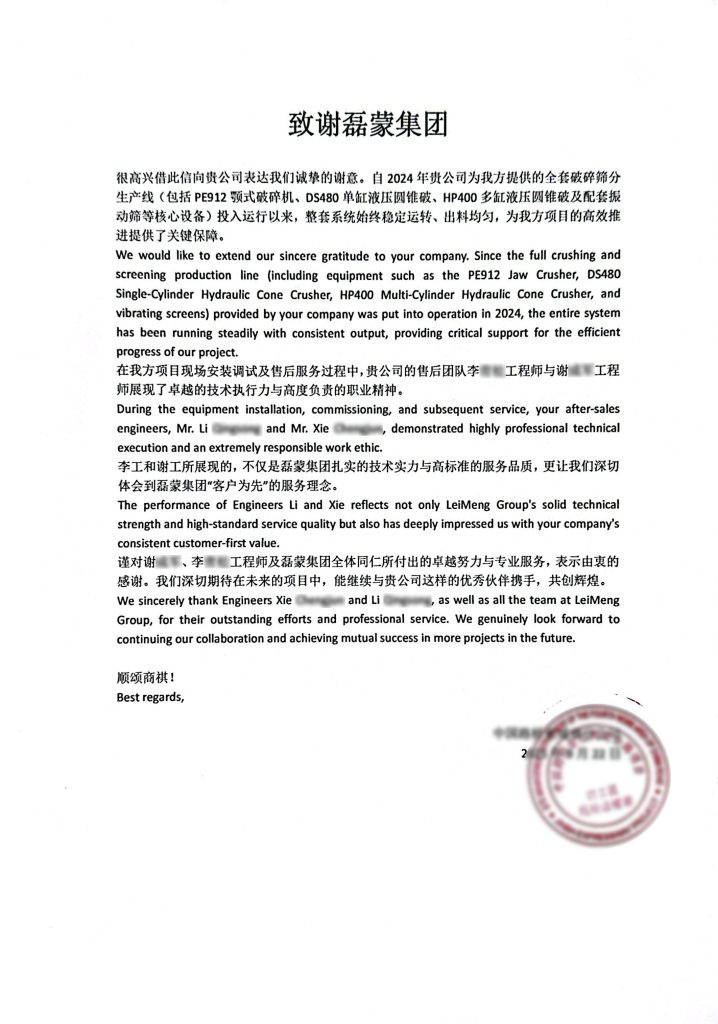
A thank-you letter from a Cambodia client recognizing Leimeng’s equipment performance, installation support, and after-sales service.
The cooperation began in 2011 and has continued for more than 14 years. What started with a single production line gradually expanded into multiple crushing and screening projects across Vietnam, supporting the client’s development in both hard rock and large-scale quarry operations.
Over the years, the projects have covered different production requirements, material characteristics and site conditions. Some operations focused on processing hard and abrasive stone, while others required large-volume aggregate production for infrastructure and construction markets. The ability to adapt plant configurations to different applications became an important factor in maintaining long-term cooperation.
The client noted that stable production performance was one of the key reasons for continuing the partnership. In quarry and mining operations, consistency is often more valuable than short-term output peaks. Reliable crushing, screening and material handling processes help operators maintain production schedules, control operating costs and meet market demand more effectively.
What impressed the client was not only equipment performance. They also emphasized rapid response in technical consultation, troubleshooting, maintenance support and parts supply. As production scales increase, even a short interruption can affect project schedules and profitability. Having a supplier that can respond quickly and provide practical solutions becomes a significant advantage.
Perhaps the most meaningful part of the Vietnam feedback is not the number of production lines delivered, but the length of the relationship itself. In the aggregate and mining industry, partnerships lasting more than a decade are usually built on repeated project success, dependable equipment performance and consistent after-sales support. The Vietnam case demonstrates how long-term cooperation can become one of the strongest indicators of a supplier’s reliability.
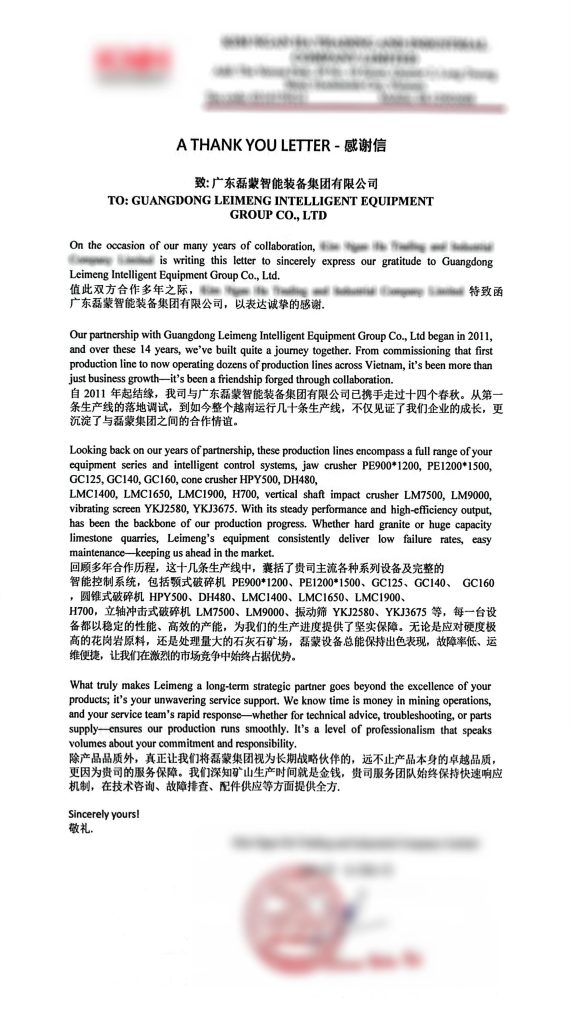
Feedback from a long-term Vietnam partner highlighting years of successful cooperation and reliable production line operation.
The Tajikistan client expressed gratitude for the crushing, sand-making and washing system provided by Leimeng. The production line was recognized for operational stability, production efficiency and product quality.
Unlike equipment-only purchases, this project required close cooperation during installation, commissioning and production startup. The client noted that Leimeng’s engineering team provided practical support throughout the process, helping optimize equipment settings based on actual material conditions and production requirements. This enabled the plant to reach stable operation more efficiently.
The client also highlighted the after-sales engineer’s support throughout installation, commissioning and follow-up maintenance. Prompt response, patient guidance and professional expertise helped ensure smooth operation of the production line. Ongoing technical communication regarding maintenance, wear parts replacement and operating recommendations further reduced downtime risks and strengthened the client’s confidence in daily plant management.
For overseas crushing plant projects, this experience reinforces an important lesson: successful delivery is only the beginning. Reliable after-sales service and long-term technical support are often what determine whether a production line can maintain stable performance year after year.
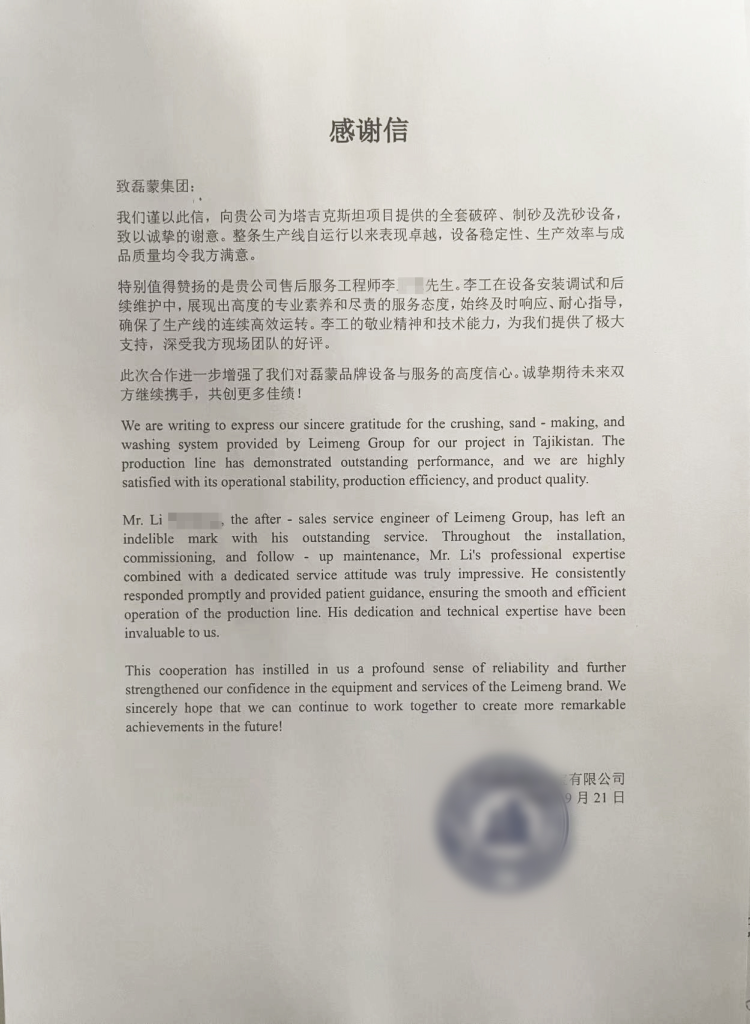
Client feedback from Tajikistan praising Leimeng’s technical support during installation, commissioning, and maintenance.
During a project survey in Southeast Asia, Leimeng’s team encountered a crushing production line that had been supplied nearly eight years earlier. Despite years of continuous operation in a demanding quarry environment, the plant was still running and producing aggregate for local construction projects.
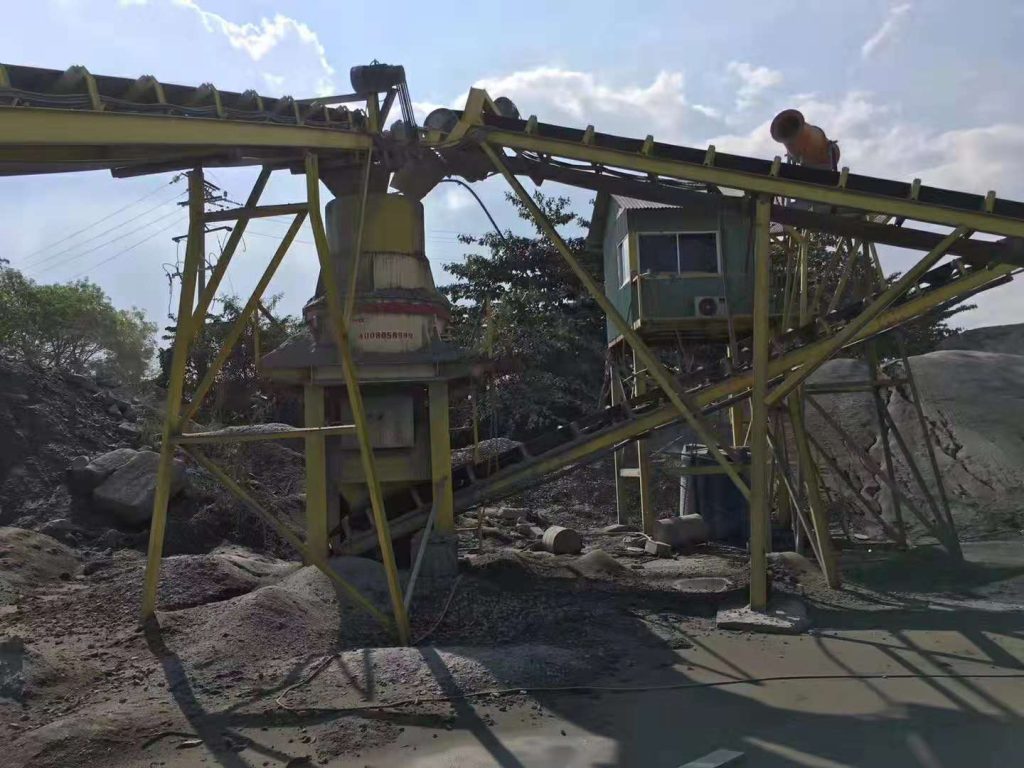
A Leimeng crushing plant in Southeast Asia that has maintained stable operation for nearly eight years with consistent production output.
The equipment showed clear signs of long-term use, but its core crushing and screening functions remained stable. For quarry operators, this kind of long-term performance is often more meaningful than technical specifications alone because it reflects how equipment performs under real production conditions.
Long service life can help reduce replacement costs, improve return on investment and support uninterrupted production. In aggregate and mining operations, reliability over many years is one of the key factors when evaluating a crushing plant supplier.
For clients planning a new crushing and screening plant, proven field performance provides valuable reference. Projects that continue operating successfully after many years demonstrate not only equipment durability, but also the effectiveness of plant design, equipment matching and ongoing technical support.
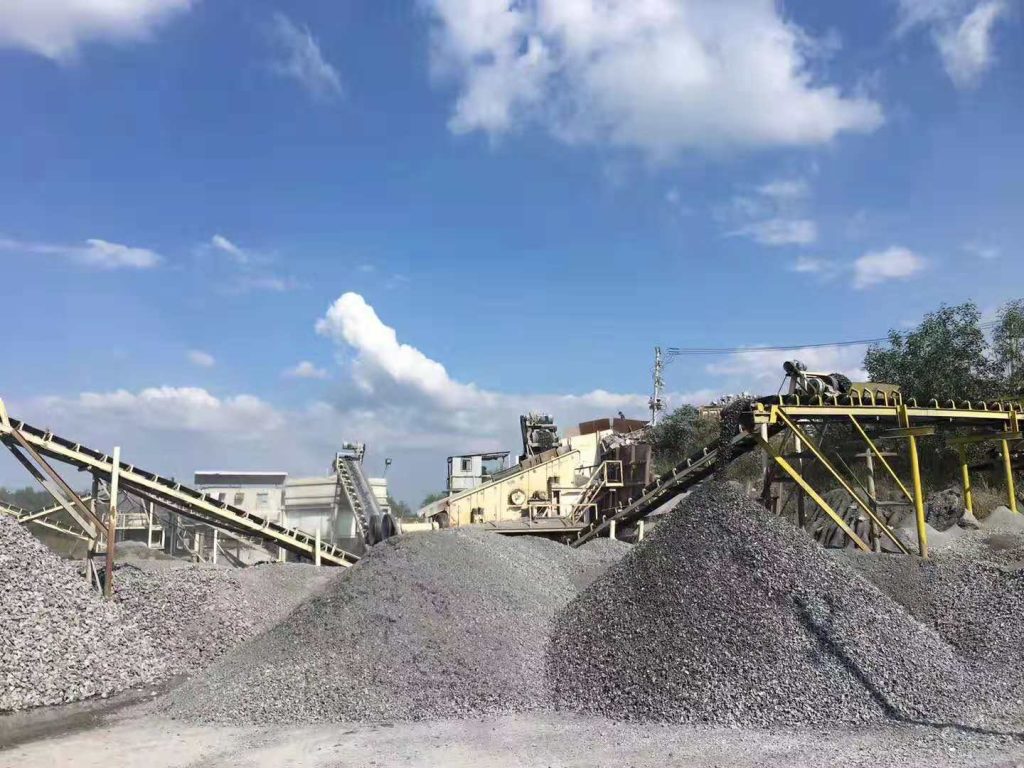
Finished aggregate stockpiles from a long-running Leimeng production line, demonstrating reliable performance and product quality over time.
Clients planning to build a quarry, mining or aggregate production plant usually ask several practical questions before choosing a supplier:
These questions are exactly why Leimeng focuses on system-level plant design and long-term service. In large-capacity projects, equipment selection goes beyond choosing individual machines. A reliable crushing and screening plant should be designed around the material, required capacity, finished product sizes, screening efficiency, wear parts life and after-sales support.
| Client Concern | What Leimeng Project Experience Shows |
| Capacity | Thailand project reached a 600 TPH design capacity |
| Equipment matching | Complete systems include crushing, screening, sand making, washing and conveying |
| Hard rock application | Vietnam projects include hard granite quarry applications |
| Limestone application | Vietnam feedback also mentioned large limestone quarries |
| Wear parts | The Thailand client recognized longer wear parts service cycle |
| Service response | The Thailand client mentioned confidence in Leimeng’s 24-hour on-site service commitment |
| Long-term trust | The Vietnam partnership has continued for more than 14 years |
| Field reliability | A Leimeng crushing line delivered nearly eight years earlier was still running in Southeast Asia |
Granite, limestone, basalt, river stone and construction waste require different crushing configurations. For hard and abrasive materials, jaw crushers and cone crushers are often more suitable for long-term production. For limestone, impact crushing and sand making may provide better shaping and process efficiency, depending on the final product requirement.
This is why crusher selection should begin with the client’s material type, feed size, hardness, abrasiveness, required capacity and finished aggregate specifications, not only with a machine model.
Screening is not simply the step after crushing. Screen mesh selection, deck configuration and screening efficiency directly affect final product size, circulating load and crusher workload.
If the screen mesh does not match the crusher discharge setting, the plant may face unstable output, higher return material and unnecessary crusher wear. For this reason, Leimeng treats crushing and screening as one connected system during plant configuration.
Wear parts affect more than replacement cost. Jaw plates, cone liners, mantles, concaves, blow bars and screen mesh all influence crusher performance, maintenance planning, downtime risk and total operating cost.
The positive feedback from the Thailand project regarding wear parts life shows how component quality can contribute to stable production and lower maintenance pressure. For quarry and mining clients, longer wear parts life can help reduce replacement frequency and protect production continuity.
Installation and commissioning are important, but long-term support matters just as much. The thank-you letters from Cambodia, Vietnam and Tajikistan consistently highlighted responsive technical assistance, installation guidance and ongoing maintenance support.
For overseas clients, this demonstrates that reliable after-sales service is a key factor in maintaining plant performance over time. A crushing plant is not only judged by how it starts, but by how it keeps working after months and years of real production.
When choosing a crushing and screening plant supplier, overseas clients should look beyond the quotation. The following points can help reduce project risk.
| What to Check | Why It Matters |
| Project experience | Shows whether the supplier has handled similar materials and capacities |
| System design ability | Ensures crushers, screens, conveyors and washing equipment work together |
| Wear parts support | Helps protect production continuity |
| Commissioning service | Helps the plant reach stable production faster |
| Operator training | Reduces avoidable mistakes and downtime |
| Local or rapid service response | Gives clients greater confidence during real site operation |
| Long-term cooperation records | Shows whether the supplier can remain reliable over time |
A responsible crushing plant supplier should not disappear after the equipment is shipped. The supplier should help clients review material conditions, select the right equipment, support installation, guide commissioning and provide practical service when production begins.
From the 600 TPH Thailand eco stone crushing plant to the long-term Vietnam partnership, from Cambodia’s 2024 full-line operation to Tajikistan’s crushing, sand-making and washing system, Leimeng’s overseas experience shows one clear pattern: stable plants are built by equipment, but long-term trust is built by service.
For overseas clients, a crushing plant is a long-term investment. The right partner should help the plant start smoothly, run steadily and continue improving over time.
Leimeng provides crushing and screening equipment, complete plant configuration, sand making and washing systems, wear parts support, installation guidance, commissioning service, operator training and after-sales support for quarry, mining and aggregate projects.
Because in overseas projects, the real value of a crushing plant is not only how it starts. It is how it keeps working, year after year.
Q1: What is crushing plant service?
Crushing plant service includes equipment configuration, installation guidance, commissioning, operator training, troubleshooting, spare parts supply and long-term technical support.
Q2: What equipment is commonly used in a 600 TPH stone crushing plant?
A 600 TPH stone crushing plant typically includes a primary jaw crusher such as the PE1200×1500, secondary and tertiary crushers such as HPY Multi-Cylinder Hydraulic Cone Crushers, YKJ Vibrating Screens, vertical shaft impact crushers for sand making, spiral sand washers and belt conveyor systems. Final configuration depends on material hardness, feed size and finished aggregate specifications.
Q3: Why are wear parts important for crushing plants?
Wear parts affect operating cost, maintenance frequency, downtime risk and crusher performance. Longer service life can help improve production continuity.
Q4: Why does screening matter in aggregate production?
Screening controls final product size and affects circulating load. If the screen mesh and crusher settings do not match, the plant may face unstable output or higher return material.
Q5: How should clients choose a crushing plant supplier?
Clients should evaluate project experience, equipment matching ability, service response, wear parts support, commissioning guidance, operator training and long-term cooperation records.
Q6: What information should clients provide before requesting a crushing plant solution?
Clients should provide material type, feed size, required capacity, final product sizes, site layout, moisture condition and any sand making or washing requirements.
Q7: How can Leimeng recommend a suitable crushing plant configuration?
Leimeng reviews the client’s material type, maximum feed size, required capacity, final product sizes, site layout, moisture condition and sand making or washing requirements before recommending a crushing and screening solution. Based on this information, Leimeng’s engineering team can help select suitable crushers, screens, conveyors, sand making equipment and washing systems for the project.
Whether you are planning a new quarry, expanding aggregate production, or upgrading an existing crushing and screening plant, providing accurate project information helps engineers recommend a more suitable solution.
Leimeng’s engineering team can evaluate your material characteristics, production targets and site conditions, then propose a customized crushing, screening, sand making and washing plant configuration based on your operational requirements.
To receive a more accurate equipment recommendation and plant layout proposal, please prepare the following information:
Email format error
Email cannot be empty
Email already exists
6-20 characters(letters plus numbers only)
The password is inconsistent
Email format error
Email cannot be empty
Email does not exist
6-20 characters(letters plus numbers only)
The password is inconsistent