
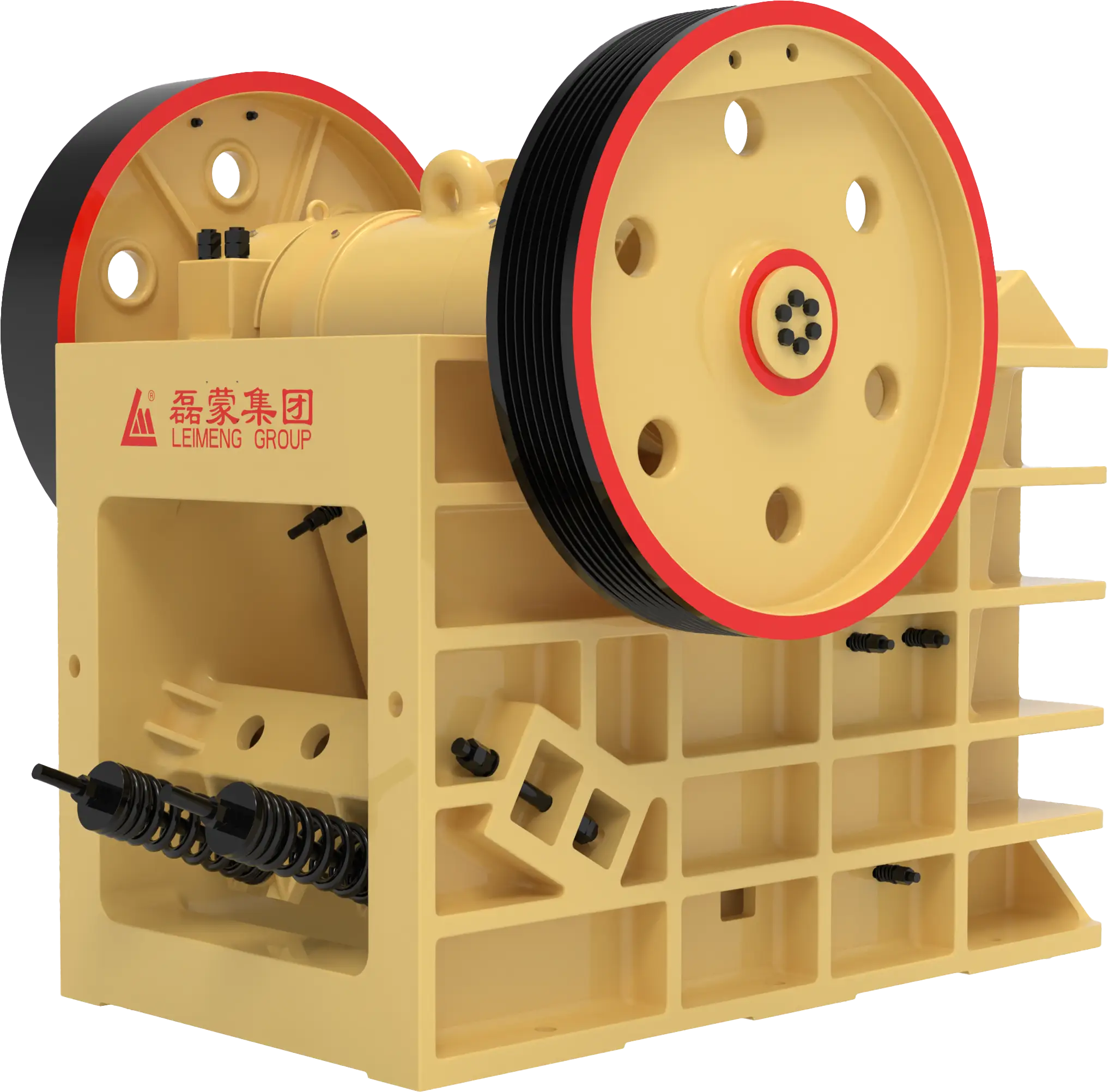
The transition from diesel-powered to electric crushing equipment represents one of the most significant advancements in the mining and construction industries. A high-quality electric jaw crusher factory doesn’t merely replace power sources; it reimagines crushing technology for improved efficiency, reduced environmental impact, and enhanced operational economics. Leimeng, with its dedicated electric crusher production lines, exemplifies how specialized manufacturing creates next-generation equipment.
Electric jaw crushers offer compelling advantages that are driving their increased adoption:
Environmental Benefits
Zero on-site emissions during operation
Reduced noise pollution (typically 10-15 decibels quieter than diesel equivalents)
Elimination of fuel storage and associated contamination risks
Compatibility with renewable energy sources
Operational Economics
Lower energy costs per ton of processed material
Reduced maintenance requirements (no engine, filters, or fuel system upkeep)
Longer component life due to consistent power delivery
Potential for regenerative braking systems to recover energy
Performance Advantages
Instant torque availability for challenging start-up conditions
Precise speed control for optimized product gradation
Consistent power output unaffected by altitude or temperature variations
Integration with automated control systems for intelligent operation
Leimeng’s specialized electric crusher manufacturing facility in Zhengzhou represents a benchmark for the industry. Spanning 45,000 square meters with dedicated production lines for electric equipment, the factory implements several innovative approaches:
Electric Drive Integration Center
Custom electric motor selection based on application requirements
Precision alignment systems for direct-drive configurations
Thermal management solutions for continuous heavy-duty operation
Harmonic filtering and power quality optimization
Intelligent Control System Assembly
PLC and HMI integration with crushing-specific algorithms
IoT connectivity modules for remote monitoring and control
Safety interlock systems and fault diagnostics
Energy consumption tracking and reporting functions
Testing and Validation Laboratory
Load simulation equipment replicating real-world conditions
Power quality analysis under varying load scenarios
Thermal imaging for hotspot identification
Acoustic measurement for noise compliance verification
Leimeng employs state-of-the-art technologies specifically adapted for electric crusher production:
Laser Alignment Systems: Ensuring perfect alignment between crusher, motor, and drive components
Thermal Management Engineering: Advanced cooling systems designed for continuous high-load operation
Vibration Analysis Equipment: Identifying and eliminating resonance points specific to electric drive systems
Electrical Insulation Testing: Verifying safety and reliability in harsh operating environments
Beyond power source substitution, high-quality electric jaw crusher factories like Leimeng’s implement design innovations:
Some advanced models incorporate regenerative braking that captures kinetic energy during the return stroke of the jaw, potentially reducing net energy consumption by 8-12%.
Intelligent controllers adjust motor output based on material hardness and feed rate, optimizing energy use while maintaining throughput.
Flexible designs allowing connection to grid power, generator sets, or renewable sources, with automatic switching capabilities.
Electrical isolation systems, ground fault protection, and emergency stop circuits exceeding standard industrial requirements.
Manufacturers must address additional quality parameters beyond mechanical crusher standards:
Electrical Safety Compliance
IP ratings for dust and moisture protection (typically IP65 or higher)
Overload protection coordinated with mechanical limits
Insulation resistance testing at 2x operating voltage + 1000V
Short circuit current withstand ratings
Electromagnetic Compatibility
EMI/RFI suppression for nearby electronic equipment
Harmonic distortion limits per IEEE 519 standards
Surge protection for lightning and switching events
Performance Certification
Efficiency ratings per ISO 50001 energy management standards
Power factor correction to utility requirements
Temperature rise testing under maximum load conditions
Different sectors benefit uniquely from electric jaw crushers:
Compliance with strict city emissions regulations
Night operation capability due to reduced noise
Reduced carbon footprint for green building certifications
Elimination of ventilation requirements for exhaust
Improved air quality for worker safety
Heat reduction in confined spaces
Direct connection to solar or wind power generation
Energy storage system integration for off-grid operation
Demand response capability during peak grid periods
Consistent performance for varied material streams
Lower operating costs improving recycling economics
Clean operation in sensitive environmental areas
A tour through Leimeng’s electric jaw crusher production reveals meticulous processes:
Stage 1: Component Fabrication
Laser cutting of structural components with precision tolerances
Robotic welding of crusher frames with minimal distortion
Machining of bearing seats and mounting surfaces on CNC equipment
Stage 2: Electrical System Integration
Custom motor selection based on application analysis
Control panel assembly with component burn-in testing
Cable harnessing with proper segregation and protection
Stage 3: Assembly and Alignment
Precision placement of rotor and bearing assemblies
Laser alignment of motor to crusher drive systems
Installation of sensors and monitoring equipment
Stage 4: Comprehensive Testing
No-load mechanical testing for vibration and alignment
Electrical safety testing including hi-pot and ground continuity
Load testing with representative materials
Control system validation and calibration
Stage 5: Documentation and Preparation
Complete as-built documentation including electrical schematics
Energy efficiency certification and performance guarantees
Customized operation and maintenance manuals
Protective packaging for international shipment
High-quality electric jaw crusher factories must navigate varying international requirements:
Voltage and Frequency
Designs adaptable to 50Hz or 60Hz operation
Voltage options from 380V to 13.8kV for direct high-power connection
Phase configuration for single or three-phase supplies
Regional Certifications
CE marking for European markets
UL certification for North America
GOST-R for Russian and CIS countries
AS/NZS standards for Australia and New Zealand
Climate Adaptations
Tropicalized versions with enhanced moisture protection
Arctic packages for sub-zero operation
Desert configurations with improved cooling and dust protection
While initial investment may exceed diesel equivalents, total cost of ownership analysis reveals compelling economics:
Case Study: 200 tph Granite Quarry Operation
Diesel Option: 350kW generator with 200kVA crusher
Fuel consumption: 45 liters/hour
Annual fuel cost (6,000 hours): $162,000
Maintenance (engine): $18,000 annually
Total 5-year operating cost: $900,000+
Electric Option: 250kW direct-drive crusher
Energy consumption: 200kW average
Annual electricity cost (6,000 hours): $96,000
Maintenance (electrical): $6,000 annually
Total 5-year operating cost: $510,000
Savings: $390,000 over 5 years (43% reduction)
Additional benefits include reduced carbon emissions (approximately 450 tons CO2 annually) and eligibility for green energy incentives in many jurisdictions.
Leimeng’s R&D roadmap highlights coming innovations:
Advanced Energy Storage
Supercapacitor banks for peak power support
Battery integration for temporary off-grid operation
Flywheel systems for smoothing intermittent supply
Intelligent Power Management
AI algorithms optimizing energy use based on material characteristics
Grid-responsive operation adjusting to electricity pricing signals
Predictive maintenance based on motor current signature analysis
Enhanced Connectivity
5G-enabled remote operation and diagnostics
Blockchain-based energy provenance tracking
Digital twin integration for performance optimization
Evaluation criteria for high-quality electric jaw crusher factories:
Electrical Engineering Expertise: In-house capability versus subcontracting
Testing Facilities: Availability of load testing with actual materials
Application Experience: References from similar projects
Support Infrastructure: Global service network for electrical components
Future-Proof Design: Upgrade paths for emerging technologies
Training Resources: Comprehensive electrical safety and operation programs
The emergence of specialized high-quality electric jaw crusher factories marks a pivotal shift toward sustainable, efficient crushing technology. Facilities like Leimeng’s dedicated electric equipment production represent the convergence of mechanical engineering excellence and electrical system innovation.
As environmental regulations tighten globally and energy economics continue evolving, electric crushing solutions transition from alternative option to preferred standard. Manufacturers investing in specialized electric crusher production capabilities position themselves at the forefront of industry transformation.
Through meticulous engineering, rigorous testing, and application-focused design, Leimeng demonstrates how dedicated electric crusher manufacturing delivers equipment that outperforms traditional options environmentally, economically, and operationally. The future of crushing is electric, and it is being built today in factories that understand both the mechanical demands of size reduction and the electrical intricacies of modern power systems.
Email format error
Email cannot be empty
Email already exists
6-20 characters(letters plus numbers only)
The password is inconsistent
Email format error
Email cannot be empty
Email does not exist
6-20 characters(letters plus numbers only)
The password is inconsistent